Direct vs Indirect TPMS Explained
Education • TPMS Technology
Direct vs Indirect TPMS Explained
When researching tyre pressure monitoring systems (TPMS), you’ll often see the terms direct TPMS and indirect TPMS. While both aim to improve tyre safety, they work in very different ways.
This guide explains how each system works, the pros and cons, and which type is better for Australian drivers, especially those towing caravans or driving 4WDs.
Part of the Safety Sam knowledge hub: TPMS Knowledge Hub.
Quick Answer
Direct TPMS uses physical pressure sensors inside or on the tyre to measure actual PSI and often temperature.
Indirect TPMS estimates pressure loss using wheel speed sensors and does not measure actual PSI.
For most Australian drivers, especially caravanners and 4WD owners, direct TPMS provides more accurate and useful data.
What Is Direct TPMS?
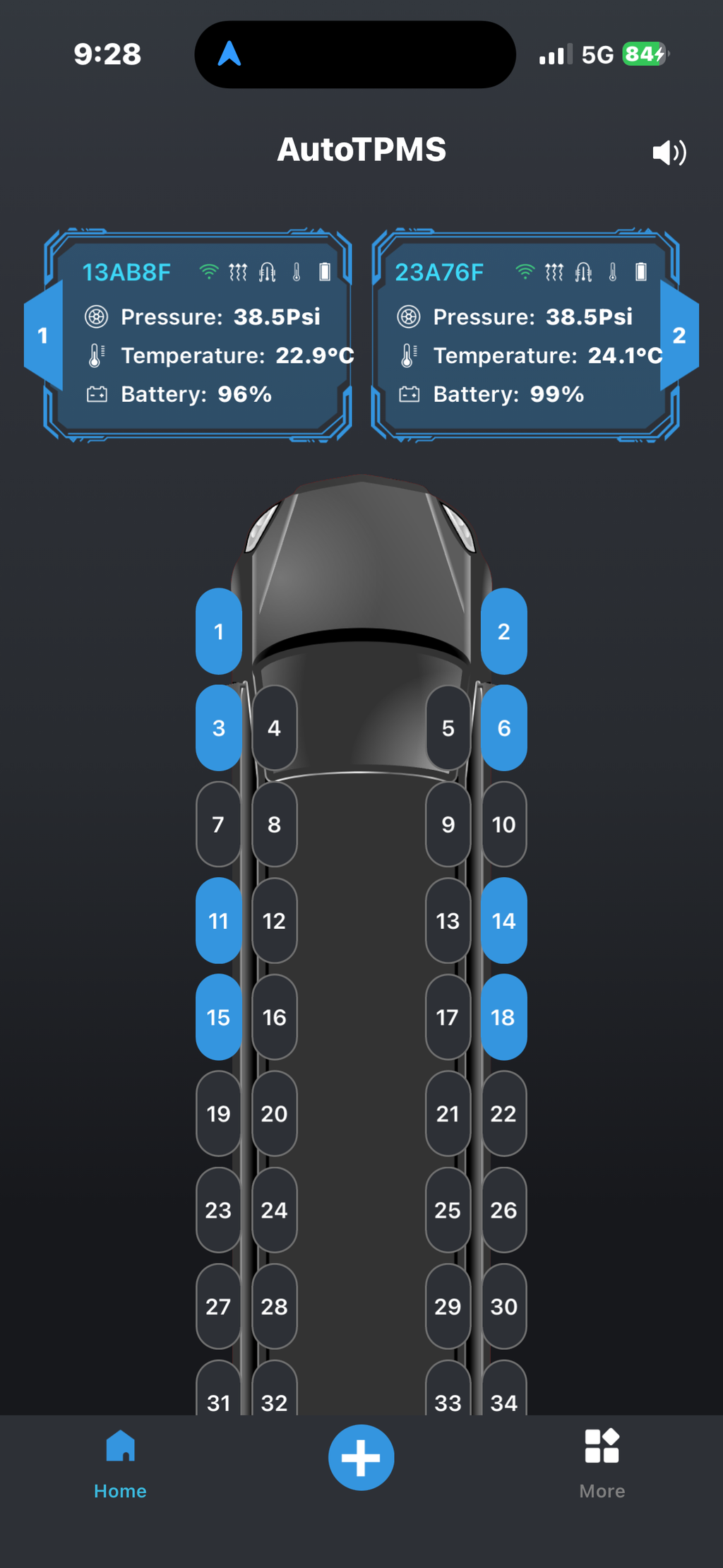
Direct TPMS uses individual sensors fitted to each tyre. These sensors measure actual air pressure inside the tyre and transmit that data to a receiver or display.
How It Works
- A sensor measures real-time pressure (PSI)
- Many systems also measure tyre temperature
- Data is transmitted wirelessly to a display or smartphone
Advantages
- Accurate PSI readings
- Real-time monitoring
- Early detection of slow leaks
- Temperature monitoring (in many systems)
- Suitable for towing and multi-axle setups
Learn how direct sensors work: How Does a TPMS Sensor Work?
What Is Indirect TPMS?
Indirect TPMS does not measure tyre pressure directly. Instead, it uses the vehicle’s ABS wheel speed sensors to detect differences in rotation speed between tyres.
How It Works
- Underinflated tyres rotate slightly faster
- The system compares wheel speeds
- If a discrepancy is detected, a warning light appears
Advantages
- No additional hardware inside tyres
- Typically factory-installed
- Lower system complexity
Limitations
- No actual PSI readings
- No temperature monitoring
- May not detect gradual pressure loss quickly
- Cannot monitor caravan or trailer tyres
Direct vs Indirect TPMS Comparison
| Feature | Direct TPMS | Indirect TPMS |
|---|---|---|
| Measures actual PSI | Yes | No |
| Temperature monitoring | Often included | No |
| Detects slow leaks early | Yes | Limited |
| Works for caravans/trailers | Yes (if multi-sensor system) | No |
| Installation | Sensors required | Built into vehicle |
Which Is Better for Australian Conditions?
Daily Driving
Indirect TPMS may be sufficient for basic alerting of major pressure loss. However, it provides limited detail.
4WD & Off-Road
Direct TPMS is better suited for off-road driving, where monitoring PSI changes after airing down is essential.
Caravan & Towing
Indirect TPMS cannot monitor trailer tyres. Direct multi-sensor systems are strongly recommended for caravanners.
Towing guide: Best TPMS for Caravans & Towing
Factory vs Aftermarket Direct TPMS
Many factory systems are indirect. Aftermarket systems are usually direct and provide clearer, more detailed data.
Comparison: Is an Aftermarket TPMS Worth It?
Cost Differences in Australia
Indirect systems are typically included from factory in some newer vehicles. Direct aftermarket systems generally cost between $120 and $400 depending on features.
Pricing breakdown: How Much Does a TPMS Cost in Australia?
Final Verdict
If you want real-time data, earlier warnings and the ability to monitor trailers, direct TPMS is the better choice.
Indirect TPMS provides basic alerting but lacks detailed pressure information.
View a direct monitoring system here: Tyre Pressure Monitoring System
FAQs
Is direct TPMS more accurate than indirect?
Yes. Direct TPMS measures actual PSI inside the tyre, while indirect systems estimate pressure loss based on wheel rotation speed.
Do all Australian cars have TPMS?
Not all vehicles in Australia are fitted with TPMS. Many older models do not include factory systems.
Can indirect TPMS detect slow leaks?
Indirect systems may take longer to detect gradual pressure loss compared to direct monitoring systems.